

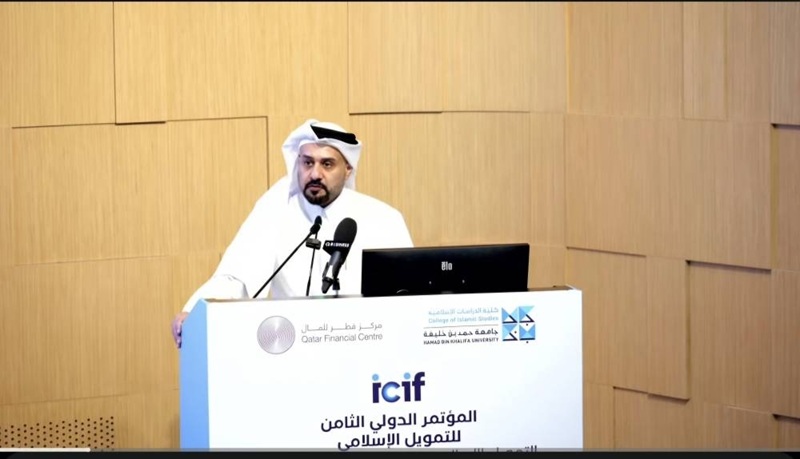
During the recent 8th International Conference on Islamic Finance, QFC CEO, Yousef Mohamed Al-Jaida announced that Qatar has already tokenized sukuk and digital takaful platforms enhancing transparency and global access while improving speed and risk sharing.
Yousef Mohamed al-Jaida CEO Qatar Financial Center (QFC) said digital investment platforms are providing automated, Shariah-compliant portfolios; while crowdfunding platforms are enabling ethical investments in real estate and social impact projects.
“We have tokenised sukuk and digital takaful platforms that are not only enhancing transparency but improving settlement speed and risk-sharing in real time,” he said, adding the extent of how emerging technologies, like blockchain, can expand Islamic finance is “limitless”.
Smart contracts and AI (artificial intelligence)-driven Shariah advisory tools can automate compliance and auditing, while cross-border digital settlement corridors and tokenized real-economy assets can enhance efficiency and global access.
According to a story in Gulf Times Newspaper, Al Jaida also noted that through the Digital Asset Lab and the QFC digital assets framework Qatar has been building its ecosystem that includes tokenization, smart contracts and digital asset custody solutions.
“These efforts create a space where Islamic finance can harness innovation while remaining firmly aligned with Shariah principles,” according to him.
In this regard, he said a recent development on the platform is the launch of a proof of concept for a blockchain-based digital receipt system, designed to enhance efficiency and regulatory compliance in Shariah-compliant asset-backed finance. This development was enabled through the collaboration of a consortium of partners — AlRayan Bank, Blade Labs, and The Hashgraph Association, each contributing unique expertise to a shared vision of financial innovation.
Highlighting that the global Islamic finance assets are projected to reach $7.5tn by 2028, al-Jaida said to broaden access to Islamic finance, there is a need to strengthen international cooperation and harmonize standards. A central component of this strategy is to integrate Islamic finance more deeply across banking, insurance, capital markets and digital finance, while raising awareness and expanding its visibility both locally and internationally, according to him.